Your phone buzzes twice while you're inside a panel with the cover off. You don't answer — you can't, both hands are where they need to be, and the breaker's not confirmed off on the circuit you're testing. Whoever it is gets your voicemail. Best case, they leave a message: now you've got a callback to make tonight, after you've already been in three attics today, hoping you remember which panel and which symptom went with which number. Worst case, they don't leave one at all, and you never find out if that was a flickering hallway switch or a homeowner standing three feet from a panel that's actively sparking.
I want to walk through two of the AI-receptionist options that show up when a DMV electrician searches for a fix — Trillet and Dialzara — against Dialkeep, which I'm building, so weigh the last third of this post accordingly. This isn't a "they're bad, we're good" post. Both of the other two are live, working products you can sign up for today, and I checked their own sites in July 2026 before writing a word of this, because a competitor comparison is worthless if the numbers are stale.
Give Trillet and Dialzara their due first
Both companies built an electrician-specific page, not a generic trades page with the word "electrician" swapped in — and both, as published on their own sites this month, describe real safety-triage logic, not just call answering.
Trillet's electricians page (July 2026) states its AI recognizes "sparking outlets or burning smell" and "complete power outage" as urgent, and on those, sends you "an immediate push notification and SMS" and attempts "to transfer the call to your mobile" — live, today, not a roadmap item. It also books straight to your calendar and sends a call-summary email. Dialzara's electricians page (July 2026) makes a similar claim from a different angle: it escalates "burning smells, complete outages, and water-near-electrical situations... to your on-call electrician immediately," and captures panel type, home age, and breaker information on the call so you're not walking in blind.
I'm not going to pretend those are thin claims. If what you want most is a live-today system that fires a text to your phone the second a caller mentions a burning smell and puts the appointment straight into your calendar without you touching anything, both of those are real, shipping capabilities, and Dialkeep doesn't have either one yet — more on that below. Say that out loud before anything else, because a comparison that hides a competitor's real strengths isn't one worth reading.
Where the two of them actually differ from each other, and from us
The honest gap isn't triage logic. It's how you get billed for the week your call volume isn't normal.
Trillet's small-business receptionist starts at $49 a month for 150 minutes, then $0.20 a minute — the $49 is pointed to from Trillet's plans page, and the 150 minutes and the $0.20 rate come from Trillet's own writeups of it. Its white-label platform tiers are separate and dearer: Studio $99 a month for 100 minutes and Agency $299 for 300, both at $0.12 a minute past the allowance. Dialzara's published plans run a four-rung ladder: Business Lite $29 a month for 60 minutes at $0.48 a minute over, up through Business Elite $349 for 1,000 minutes at $0.35. All of it checked against their own pages on August 19, 2026 — re-check them yourself if you're reading this months later, because these pages move. Not one plan on either published pricing page is flat-rate or unlimited-minute — Trillet does market unlimited workspaces and AI agents, and Dialzara unlimited knowledge-base uploads, but minutes themselves are metered on every tier of both. Every one of them has a meter that starts running once you're past your included minutes.
For a lot of electrical calls, that's fine. A routine outlet swap, a ceiling-fan install, a quote on a panel label job — those calls are short, predictable, and spread evenly across a normal month. If that's most of your call mix, a $29 or $49 entry tier with a hard minute cap might genuinely be all you need, and I'd rather tell you that than pretend otherwise.
The week that breaks the meter is the week you can't control
Electrical work doesn't stay evenly spread all year. DMV electricians get slammed the same week, not gradually — a derecho or a bad summer storm line takes down trees and power across whole neighborhoods in the same afternoon, and your phone rings the way it rings maybe twice a season, all at once. DC and the older parts of Arlington and Prince George's County carry a lot of housing stock — rowhouses, postwar construction — built before modern panel standards, some of it still running aluminum branch wiring from the era it was common. That mix means a bigger share of DMV calls than a newer-construction market would see are genuinely panel-and-wiring-safety calls, not routine bookings, and they cluster hardest exactly during and after a storm event.
Here's a purely illustrative example, not a claim about your actual bill: say a derecho week runs your call volume well past what a normal week uses — call it 90 extra minutes beyond whatever plan you're on. On Dialzara's Business Lite tier, at $0.48 a minute, that's $43.20 in overage on top of the $29 base — a $72 month against a $29 one. On Trillet's $49 entry tier, at its published $0.20 a minute, the same 90 minutes is $18, for a $67 month. On Trillet's $99 Studio tier at $0.12, it's $10.80, though that plan starts $50 higher and gives you fewer included minutes than the $49 one does. Run your own numbers against your own invoice — the shape is what matters, not my hypothetical minute count: the meter bills hardest on the week you can least afford a surprise, because that's the one week volume and stakes rise together.
The part where I tell you what we're actually building
I'm building Dialkeep to run at a flat $199 a month, unlimited calls, specifically so a storm knocking out power to half the neighborhood doesn't cost more than a quiet Tuesday. Here's the honest state of it today, and I'd rather undersell this than have you find the gap yourself: Dialkeep isn't live. There's no demo number in this post to call tonight. What it's built to do is answer, tell a caller the truth if they ask whether it's a robot, and capture the details — name, address, what's going on with the panel or the power. Electrical safety guidance isn't part of that yet: no electrician profile exists today, so it doesn't recognize a sparking panel or a burning smell as the hazard signals it would need to say anything useful about them — the only trade-safety triage Dialkeep has shipped is plumbing's water-shutoff guidance, and that doesn't apply here. What it does not do, today, is fire off a text, push a notification to your phone, transfer the call to a live human, or drop anything onto your calendar automatically — the exact things Trillet and Dialzara both already ship. Nothing the caller says has any route to the owner today, by any of those or any other path. That's the real tradeoff right now: a flat bill that doesn't spike on your worst week, against two competitors with a smaller bill most months but real, live features Dialkeep hasn't built yet.
If voicemail is still your actual answering service, any of the three options above beats it. Which of the three is right for you depends on whether your calls run steady or bursty, and whether "a text lands on your phone the second it happens" matters more to you right now than "never spikes on a storm week."
Do the math on your own week
Pull your last few months of call volume, or estimate it if you don't track it: how many calls, how many minutes, and how many of those weeks looked nothing like the others. Run it through the missed-call calculator to see what a missed call is modeled as worth for a shop your size — it's an illustration, not a study, so treat it as a starting number, not gospel. Then check that number against Trillet's $49-and-up meter, Dialzara's $29-and-up meter, and a flat $199. If your weeks stay quiet and even, the cheap tier might be the right call, full stop. If your worst week of the year is also your busiest, that's the week worth pricing out before it happens, not during it.
Built for electricians
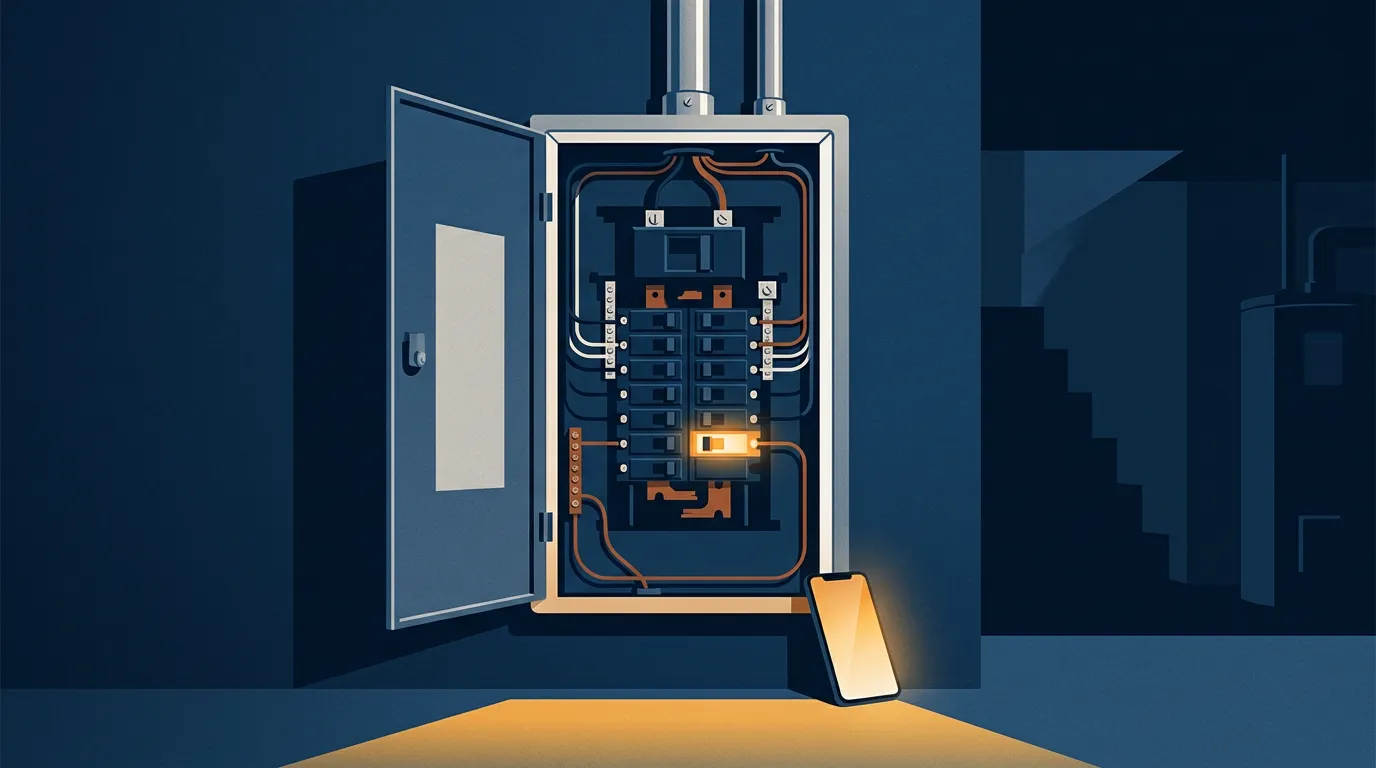
A flickering switch can wait till Tuesday. A sparking panel can't wait five minutes, and voicemail can't tell the difference. Neither does this — not yet. No electrician profile exists today, and it does not walk a caller through safety steps on any line. What's real right now: it answers and captures the details on every call.
Catch the sparking-panel call while you're still on the ladder — it picks up so you don't have to →